
Ceramic coating application is challenging on vehicles with extensive body cladding because unpainted textured plastics, porous rubber trim, and gloss painted panels absorb liquid polymers at vastly different rates and require separate surface preparation protocols. Without precise tape masking and trim-specific ceramic formulas, standard paint coatings cause chalky white staining, uneven sheen, or premature peeling across wheel arches and lower bumpers. Mastering multi-surface vehicles demands tailored surface chemistry, disciplined masking, and trained hands that respect how each material cures.
Surface Chemistry Differences Between Painted Panels and Textured Cladding
Walk around any modern crossover, off-road SUV, or adventure truck, and you will notice how much of the lower body is wrapped in unpainted black or dark-gray composite cladding. Automakers rely on textured polypropylene and thermoplastic olefin (TPO) wheel arches, rocker panels, and lower valances to shrug off gravel kick-up and trail brush. While these rugged panels serve a practical purpose on the road, they completely change how liquid nano-ceramic coatings behave during installation.
When vehicle owners look into ceramic coating in Chico, CA, they often drive trucks and SUVs built for Northern California highways, mountain trails, and intense valley sunshine. Understanding why painted clear coat and textured cladding react differently to liquid coatings explains why a careful, multi-surface workflow is essential for clean, lasting results.
Porosity, Texture Absorption, and Boundary Bleed
Two main physical factors complicate coating vehicles with heavy exterior trim:
- Micro-Textured Thermoplastic Absorption: Automotive clear coat is hard, non-porous, and slick, allowing liquid silicon dioxide (SiO2) formulas to spread smoothly and level cleanly. By contrast, unpainted cladding is covered in thousands of microscopic peaks and valleys that act like a sponge. If an installer applies too much liquid resin, or uses a rigid paint formula, the plastic absorbs the product unevenly, curing into blotchy dark streaks or chalky white haze that cannot simply be polished away.
- Paint-to-Trim Seam Contamination: Wherever a glossy painted fender meets a matte wheel-arch flare, there is a narrow, recessed seam. Carrying a paint-coating applicator across that border transfers high-solid paint resin onto rough plastic pores, creating glossy smears or stubborn white residue right along the transition line.
Step-by-Step Multi-Surface Coating Protocol for Clad Vehicles
Protecting a vehicle with extensive lower cladding cleanly requires dividing the exterior into separate material zones and following five deliberate steps:
- Dedicated Trim & Paint Decontamination: Stripping embedded road tar, silicone dressings, and wax buildup from textured plastic pores using specialized trim-safe prep solvents before any masking tape touches the vehicle.
- Precision Edge Masking: Applying clean-release, low-tack automotive detailing tape along every wheel-arch flare, rocker panel, and bumper transition seam to isolate gloss paint zones from matte cladding.
- Painted Panel Correction & Ceramic Bonding: Machine-polishing painted bodywork to mirror clarity and applying high-solid paint ceramic formula cleanly up to the masked trim boundary.
- Trim-Specific Elastomeric Ceramic Application: Removing the masking tape and applying a dedicated, flexible plastic-and-trim ceramic coating engineered to penetrate textured pores without cracking or whitening.
- Multi-Angle Sheen Verification: Inspecting transition seams under high-CRI bay lighting to verify uniform factory-satin richness on cladding alongside deep mirror gloss on painted panels.
Dedicated Trim Ceramic Formulas vs. Standard Paint Coatings on Cladding
Trying to save time by wiping a standard paint coating over unpainted plastics is one of the quickest ways to ruin the appearance of an SUV or truck. Comparing dedicated trim ceramic chemistry against standard clear-coat formulas highlights why surface-specific engineering matters.
Performance & Compatibility Across Cladding Materials
| Surface Factor | Dedicated Trim Ceramic Coating | Standard Paint Ceramic Coating on Plastic |
| Polymer Flexibility | High elasticity bends with thermal plastic expansion | Rigid cross-linking can micro-crack or flake on flexible trim |
| Visual Sheen & Finish | Restores deep, uniform OEM satin richness | Often creates blotchy glossy streaks or chalky white haze |
| Pore Penetration | Formulated to wick evenly into textured plastic valleys | Pools unevenly on rough textures and flashes too quickly |
| UV Fade Prevention | High UV absorber load stops gray chalking and oxidation | Limited plastic UV stabilization; prone to premature fading |
| Masking Requirement | Applied cleanly after painted panels are coated and unmasked | Requires strict tape isolation to prevent accidental trim staining |
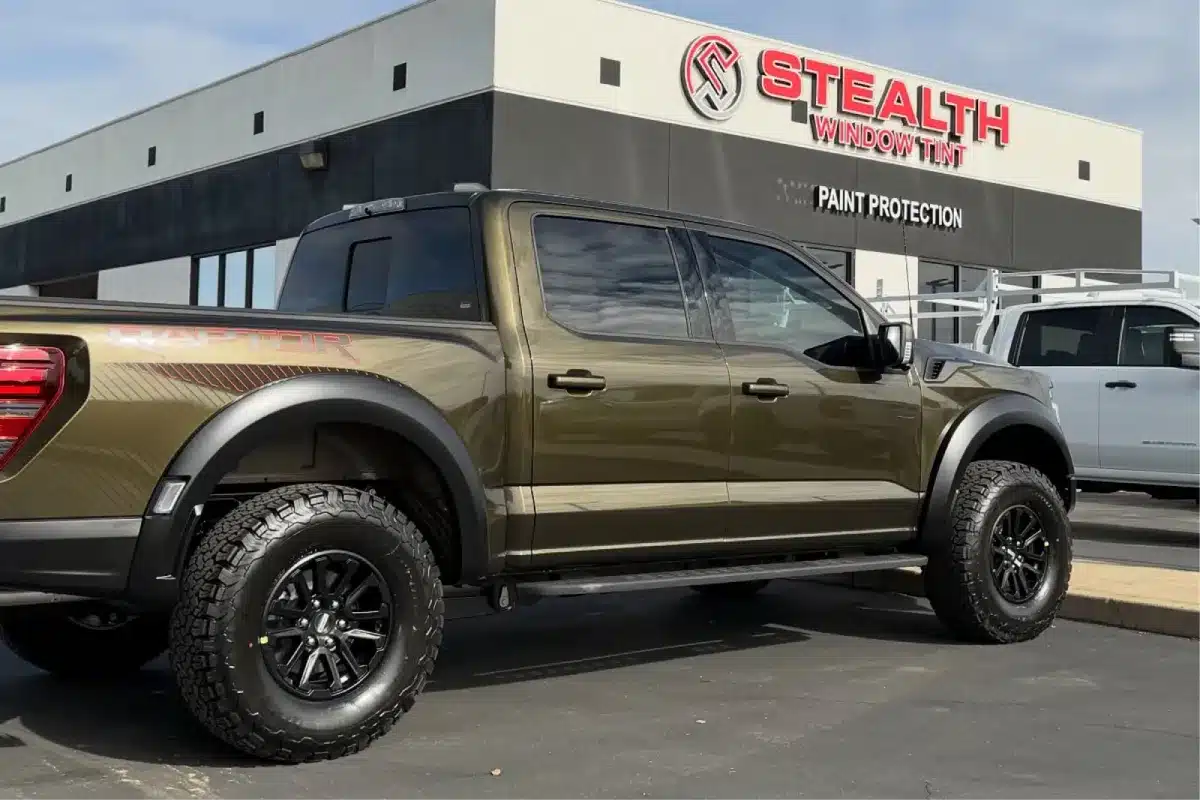
Applying Our Core Standards to Protect Clad Vehicles
At Stealth Window Tint and Paint Protection, we combine cutting-edge automotive technology with detail-oriented craftsmanship to deliver customized protection built around your vehicle. Serving drivers and enthusiasts across Chico, CA, and Northern California, we approach every project with 20+ years of experience, innovation, quality, and reliability, ensuring both gloss paint and rugged body cladding receive surface-specific care.
Our multi-surface ceramic process is designed to deliver complete, real-world performance:
- UV Protection & Chemical Resistance: Intense sunlight, agricultural dust, bug splatter, and road grime quickly oxidize unprotected paint and bleach black plastic trim gray. Our dual-formula ceramic approach shields both clear coat and textured cladding against solar UV rays and harsh environmental contaminants.
- Scratch Resistance & Superior Long-Term Protection: By bonding dedicated nano-ceramic layers to each surface type, we build a resilient barrier against wash marring, brush contact, and daily road wear that lasts for years rather than washing off after a few rainstorms.
- Hydrophobic Properties & Enhanced Appearance: Painted panels gain deep, liquid-like showroom clarity while textured wheel arches and bumpers retain a rich, uniform OEM satin sheen—all while shedding mud, water, and dust effortlessly.
- Time-Saving Maintenance & Cost-Effective Solution: Instead of spending weekends reapplying temporary tire and trim dressings or scrubbing baked-on mud from porous plastics, routine washes become fast, simple, and predictable, making professional protection a smart long-term value for your vehicle.
For drivers searching for dependable ceramic coating in Chico specialists, working with a team that treats painted panels and textured cladding as distinct surfaces guarantees clean, factory-authentic results.
Debunking the “One Coating Fits All Surfaces” Myth: Why Trim Needs Dedicated Chemistry
Industry Myth: “A single bottle of standard paint ceramic coating can be wiped straight across painted panels, black plastic wheel arches, and rubber trim all at once.”
The Reality: Automotive clear coat is hard, non-porous, and rigid, whereas exterior body cladding is soft, porous, and thermally flexible. Wiping a rigid paint coating across textured plastic frequently causes uneven absorption, streaky glossy patches, or milky white chemical staining. Even worse, because textured plastic cannot be safely machine-polished to remove high spots, an improper application can permanently mar the trim’s factory grain.
Using separate, surface-engineered ceramic formulas for gloss paint and textured cladding eliminates that risk. Choosing experienced Chico ceramic coating installers who mask every transition edge and apply trim-specific chemistry ensures every inch of your vehicle looks crisp, uniform, and properly protected.
Protect Every Painted Panel and Textured Arch With Precision
Vehicles with extensive body cladding deserve meticulous preparation and customized protection engineered for both gloss paint and textured trim. At Stealth Window Tint and Paint Protection, our knowledgeable, customer-focused team takes pride in helping drivers feel confident and excited knowing their vehicle is protected with advanced materials and precision workmanship.
Whether you drive a daily crossover, lifted truck, or weekend adventure SUV, we are ready to tailor a multi-surface protection package built to last. Request a free quote or contact us today to schedule your consultation for premier ceramic coating service!
Frequently Asked Questions
Can ceramic coating restore faded black plastic body cladding?
Yes. A dedicated trim ceramic coating penetrates clean, decontaminated plastic pores to darken faded gray trim back to a rich OEM satin finish while locking in UV inhibitors that prevent future sun bleaching.
Why does standard paint ceramic coating turn white or streaky on textured plastic?
Textured plastic absorbs liquid resin unevenly across its microscopic peaks and valleys. Standard paint coatings flash too rapidly inside rough pores, leaving behind un-leveled high spots that cure into milky streaks or blotchy patches.
How do installers prevent ceramic coating from getting onto unpainted wheel arches?
Professional detailers decontaminate the trim thoroughly first, apply precision low-tack masking tape along every paint-to-plastic seam before coating the paint, and then remove the tape to apply a dedicated trim coating separately.
Is ceramic coating worth it on SUVs and trucks with lots of plastic cladding?
Yes. Vehicles with heavy lower cladding are frequently exposed to mud, gravel, road grime, and intense UV rays. Coating both the paint and the cladding prevents plastic fading, stops dirt from staining textured pores, and cuts wash time dramatically.